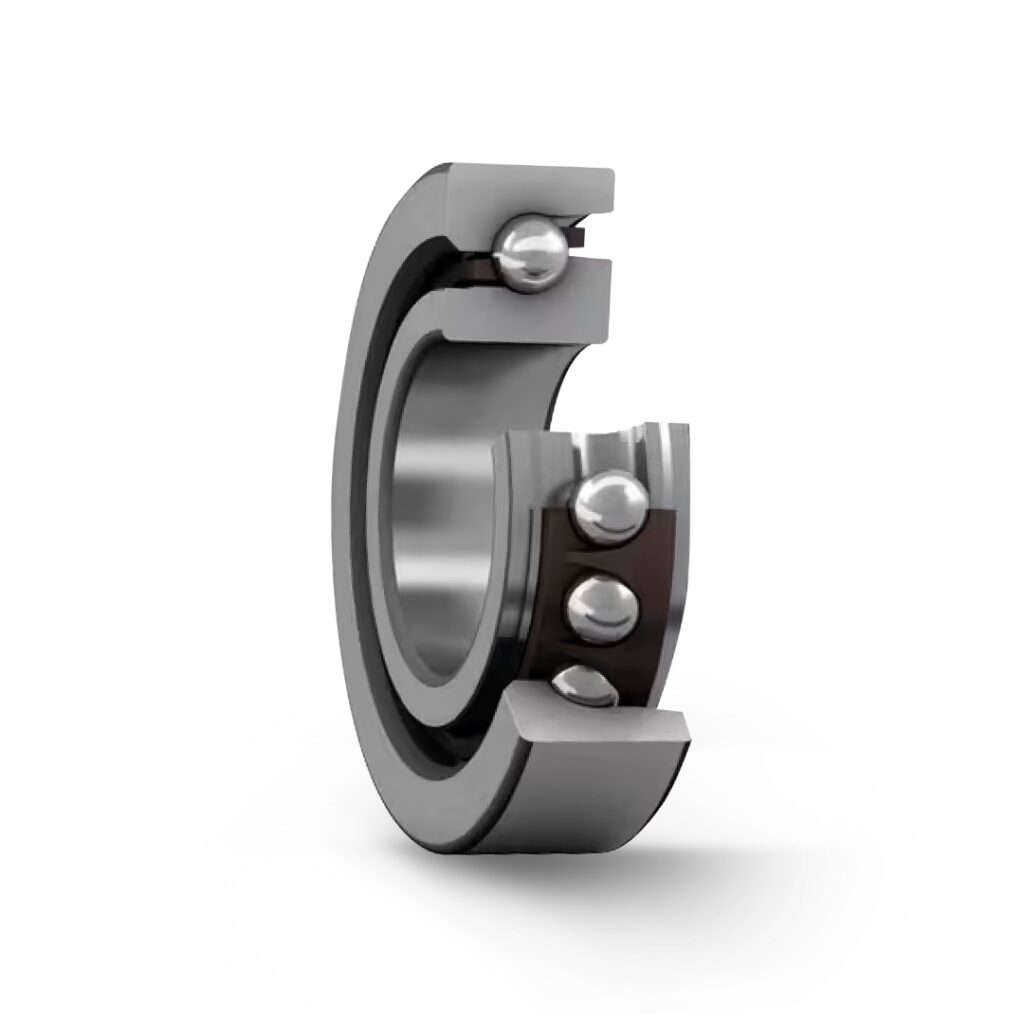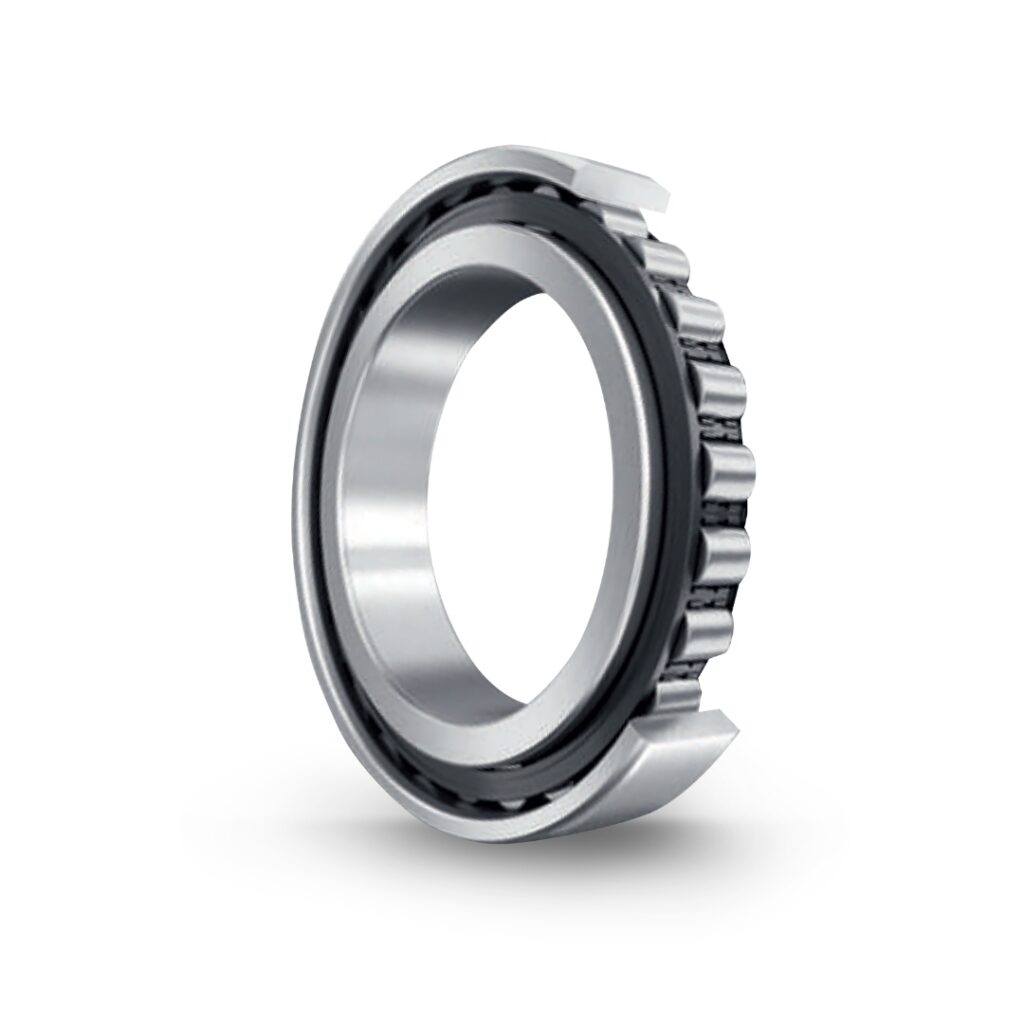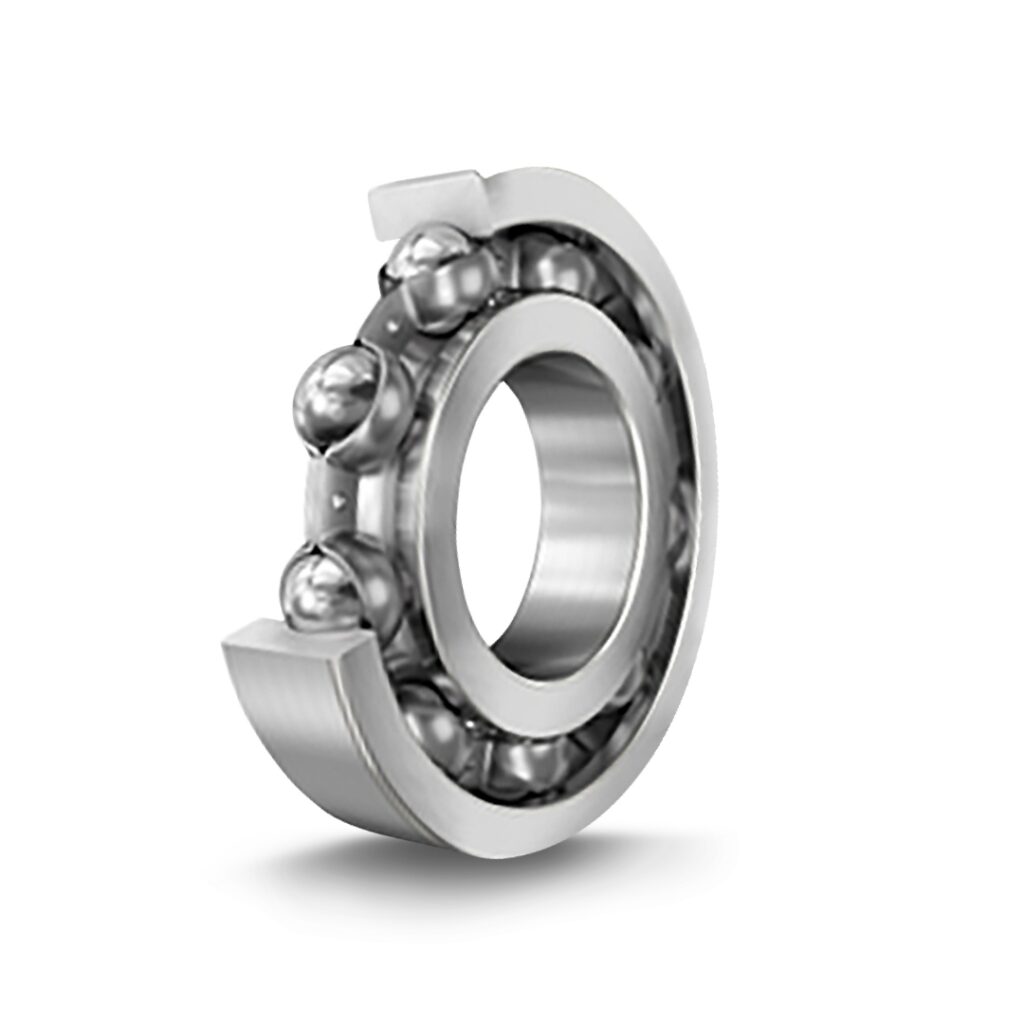
Bearing retainers, also known as bearing cages, play a critical role in overall bearing performance, longevity, and reliability. Selecting the proper bearing retainer material and design requires careful consideration of several factors, including cost, maximum operating speed (RPM), operating temperature, and specific application conditions such as load, lubrication, and environment.
Each of these variables directly impacts how the retainer controls rolling elements and maintains consistent spacing under real-world conditions. An incorrect retainer selection—whether driven by cost alone or a misunderstanding of operating limits—can lead to excessive wear, increased friction, noise, or premature bearing failure, ultimately compromising system performance and uptime.
Common Bearing Retainer Types and Applications
Steel Retainers
Steel retainers are the most widely used bearing cage type and serve as a dependable, general-purpose solution. Available in radial and crown designs, they are cost-effective, durable, and well suited for moderate speeds and operating temperatures.
Steel retainers are commonly used in industrial applications where operating conditions are stable and extreme performance demands are not required. While not ideal for very high-speed applications due to their mass and inertia, steel cages provide excellent strength and long service life in traditional machinery and equipment.
Steel retainers are commonly found in miniature and instrument bearings manufactured by NHBB, GRW, and HQW.
Nylon Retainers
Nylon retainers are a popular choice for high-speed bearing applications due to their lightweight, molded construction. This design reduces friction and inertia, making nylon a cost-effective alternative to metal retainers at elevated RPMs.
Available in both crown and full-type designs, nylon retainers are suitable for radial and angular contact bearings. Their primary limitation is temperature, with a maximum continuous operating range of approximately 250°F (121°C). Within these limits, nylon retainers offer an excellent balance of speed capability and value.
Nylon retainers are frequently used in machine tool bearings produced by manufacturers such as Schaeffler, NTN, and Nachi.
Phenolic Retainers
Phenolic retainers are designed for higher-performance applications requiring increased speed and temperature capability. Like nylon, phenolic bearing cages are available in crown and full-type designs, making them suitable for both radial and angular contact bearings.
Phenolic material supports higher speeds than nylon and can operate at temperatures up to approximately 350°F (177°C). Its porous structure allows for vacuum impregnation with oil, improving lubricity and extending lubrication intervals. For added strength and higher speed capability, phenolic retainers may be constructed with aluminum rivets.
However, phenolic retainers are not suitable for vacuum applications, as impregnated lubricants may outgas under vacuum conditions.
Phenolic retainers are commonly used in high-speed miniature and thin section bearings from NHBB, GRW, and HQW, as well as in machine tool bearings manufactured by SKF and Schaeffler.
PEEK Retainers
PEEK (polyether ether ketone) retainers represent a premium bearing cage solution for extreme operating environments. They offer exceptional high-speed capability combined with a wide operating temperature range, up to approximately 500°F (260°C).
PEEK is highly resistant to chemicals and is well suited for demanding applications such as autoclaving, clean-room environments, and exposure to aggressive media. For optimal performance under extreme conditions, PEEK retainers are often paired with ceramic rolling elements and high-nitrogen steel races, delivering superior speed capability, temperature resistance, and extended bearing life.
PEEK retainers are commonly used in high-speed miniature bearings from NHBB, GRW, and HQW, as well as in machine tool bearings produced by SKF and GMN.
Specialty Bearing Retainer Materials
In addition to these primary retainer materials, specialty options such as PGM, brass, and PTFE retainers may be specified for niche applications with unique speed, temperature, lubrication, or environmental requirements.
Choosing the Right Bearing Retainer
Bearing retainer selection is a critical design decision that directly affects bearing performance, reliability, and service life. Each retainer material—steel, nylon, phenolic, and PEEK—offers distinct advantages and limitations depending on speed, temperature, lubrication, and environmental conditions.
Understanding these tradeoffs early in the design or sourcing process helps prevent premature bearing failures, unplanned downtime, and unnecessary costs. By selecting the appropriate bearing retainer for the application, engineers and buyers can ensure consistent operation, longer bearing life, and optimal performance in even the most demanding environments.
If you need assistance selecting the right bearing retainer for your application, an Alpine Bearing inside sales engineer is available to evaluate your requirements and recommend the best solution.